Repair · pumps · leaks · equipment
Fixed with instruments, not guesses.
Pumps that quit, cells that scale, water levels that drop overnight — we diagnose with pressure tests, meters and listening gear, agree the price, then fix it. Licensed pool contracting, which in Florida is what the law requires for this work.
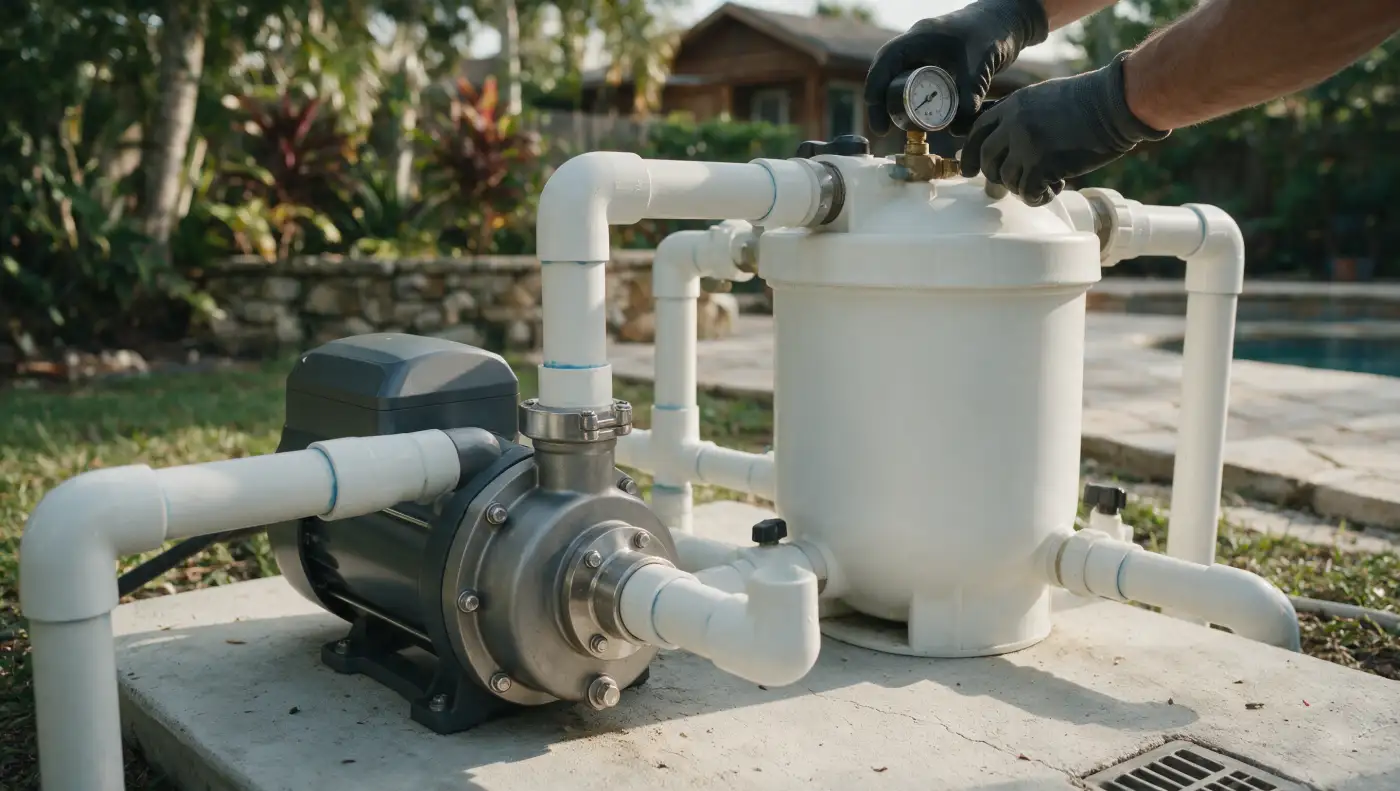
Pumps & equipment.
The equipment pad is where coastal Florida shows its teeth. Air out here carries several times the salt of inland air, and it works on motor windings, terminals and heater exchangers every single day. When your pump screams, trips the breaker or leaves a drip line on the pad, we start with a diagnosis, not a catalogue: seal, bearing, capacitor and impeller problems get repaired; tired single-speed units get the honest variable-speed conversation — quieter, dramatically cheaper to run, and compliant with Florida's efficiency rules.
Heaters, salt cells, filters, automation, timers and valves get the same treatment: measure, quote, fix. And under Florida Statute Chapter 489, repairs touching the plumbing or electrical side of pool equipment are licensed contracting work — which is exactly what you're hiring.
Pump down right now? Repairs dispatch ahead of the route queue.
Call (561) 555-0142Leak detection
Losing water? Let's find out where — without digging.
A West Palm Beach pool loses up to a couple of inches a week to honest evaporation in summer. More than that — or steady loss in mild weather — and something's leaking. The hunt runs in order of likelihood and least disruption:
- Bucket test to separate evaporation from loss (we'll talk you through it on the phone, free).
- Pressure testing each plumbing run — suction, returns, spa lines — to isolate or clear the pipes.
- Dye testing skimmer throats, fittings, returns and light niches — where most leaks actually live.
- Acoustic listening on the shell and deck for the rare underground breach, located to the foot before any concrete is touched.
Most finds are repaired wet — no drain, no excavation. That matters more here than most places: in our water table, draining a pool is itself a structural risk, because an empty shell in saturated ground can lift. If a repair ever genuinely requires lowering the water, we check and manage groundwater first, the way the engineering demands.
You get the finding in writing — what's leaking, where, the fix and the price — whether or not you do the repair with us. Diagnostic visits are flat-priced and credited against the repair when we do the work.
Water bill creeping up? A bucket and 24 hours will tell you a lot.
Call (561) 555-0142 Book leak detectionRepair questions
The ones we hear at the pad.
Is it worth repairing a pool pump?
It depends on age and which half failed. A motor under roughly five years old with a sound wet end is usually worth repairing — seals, bearings and capacitors are honest fixes. An older single-speed pump usually isn't: a variable-speed replacement typically pays for itself in electricity, runs quieter and satisfies Florida's efficiency rules. We diagnose first and give you the repair-versus-replace maths before anything is opened.
What are common pool pump problems?
In salt-air country, the usual suspects in order: shaft seal leaks (a drip line under the pump), screaming bearings, corroded terminals and capacitors, cracked pump lids and o-rings losing prime, and clogged impellers after storms. Coastal pads see the electrical failures sooner — the salt in the air does measurable work on motors and boards.
What is the average life of a pool pump?
Eight to twelve years for a well-kept pump inland; expect the shorter end of that near the Intracoastal or the beach, where corrosion is faster. Weekly service stretches lifespan meaningfully — a pump that never runs dry, never fights a clogged basket and gets its unions checked lives years longer than a neglected one.
How do I detect a leak in my pool?
The homeowner version: the bucket test. Set a bucket of water on a step, mark both levels, wait 24 hours with the pump off — if the pool dropped more than the bucket, you likely have a leak rather than evaporation. Our version: pressure-testing each plumbing line, dye testing suspect fittings, and acoustic listening on the shell. We find it before anyone talks about digging.
Where is the most common place for a pool leak?
The skimmer — specifically the throat where the plastic skimmer body meets the concrete shell. Fittings, returns and light niches come next, then underground plumbing, and actual shell cracks are the rarest. It's good news in disguise: the most common leaks are also the most repairable, often without draining the pool.
Can you fix a pool leak without draining the pool?
Very often, yes. Skimmer-throat repairs, fitting seals, light-niche repairs and dye-located crack injections are all done wet. Full drains are a last resort here for a structural reason: in our water table, an empty shell risks floating. If a drain is ever genuinely needed, groundwater gets checked and managed first.
How much does it cost to detect a pool leak?
Leak detection is a flat diagnostic visit — the price is agreed on the phone before we arrive, and it's credited against the repair if you do the fix with us. What moves repair pricing afterwards: where the leak is (a fitting versus underground plumbing), whether access is open deck or paved, and whether it's one leak or several small ones.